


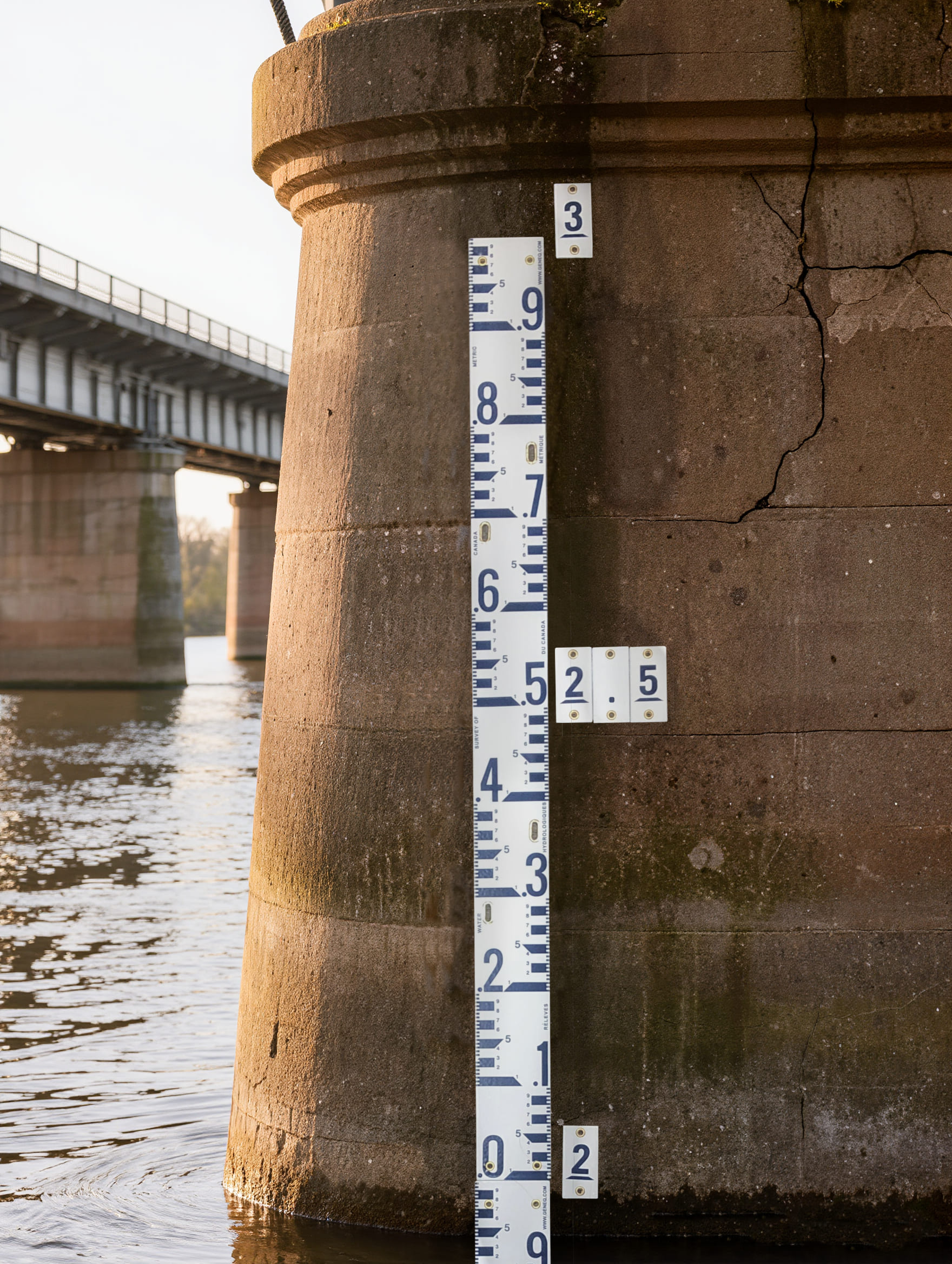
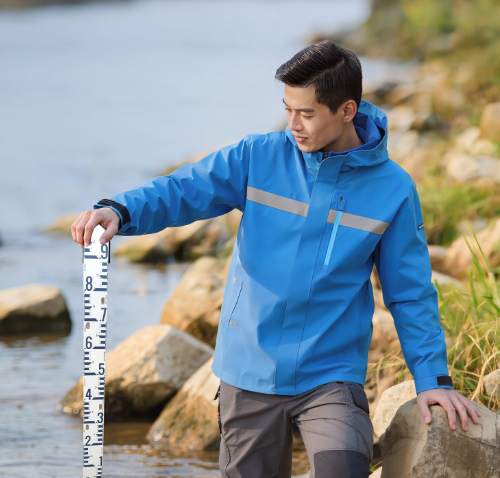
The Staff Gauge HY-9000 is finished with special porcelain enamel to ensure easy reading and to resist rust or discoloration.
Water Survey of Canada Staff Gauge – 1 m × 80 mm
The Water Survey of Canada staff gauge provides a simple, durable and highly visible method for observing water level in rivers, streams, lakes, reservoirs, channels and water-control structures. Manufactured in a one-metre metric section, the gauge is graduated in centimetres with each decimetre clearly numbered for fast visual readings in the field.
Its special porcelain-enamel finish creates a smooth, weather-resistant surface that helps protect the markings against rust, fading and discolouration. The contrasting graduation pattern remains easy to read from a practical observation distance, making the gauge suitable for permanent hydrometric stations, municipal water systems, environmental monitoring programs and industrial facilities.
A staff gauge may be used as a stand-alone visual water-level indicator or as a reference gauge for checking readings produced by pressure transducers, bubblers, float systems, radar sensors and other automated level-monitoring instruments.
Key Features
- Metric staff gauge manufactured in a one-metre section.
- Overall gauge width of 80 mm.
- Graduated in centimetres for convenient water-level observations.
- Each decimetre is clearly numbered for rapid interpretation.
- High-contrast pattern supports easy reading in outdoor conditions.
- Special porcelain-enamel finish resists rust and discolouration.
- Suitable for permanent or temporary water-level monitoring stations.
- Can be combined with figure plates to identify the applicable elevation range.
- Compatible with manual observations and automated hydrometric systems.
- Requires no electricity, batteries or electronic programming.
Typical Applications
This staff gauge can be installed wherever operators, technicians or researchers need a direct visual indication of water level. Typical applications include:
- Rivers and streams.
- Lakes and reservoirs.
- Hydrometric monitoring stations.
- Irrigation canals and drainage channels.
- Stormwater retention and detention ponds.
- Dams and water-control structures.
- Weirs and flumes.
- Municipal water and wastewater facilities.
- Sewage treatment plants.
- Wetlands and environmental restoration sites.
- Flood-warning and emergency-management stations.
- Mining and industrial water-management systems.
- Aquaculture installations.
- Agricultural water-storage ponds.
- Research and educational field stations.
Technical Specifications
| Product type | Metric water-level staff gauge |
|---|---|
| Design | Water Survey of Canada style |
| Section length | 1 m |
| Width | 80 mm |
| Graduations | Centimetres |
| Numbering | Each decimetre is numbered |
| Surface finish | Special porcelain enamel |
| Reading method | Direct visual observation |
| Power requirement | None |
| Installation orientation | Normally vertical |
| Optional components | Figure plates and site-specific mounting hardware |
Clear Metric Water-Level Readings
The one-metre gauge is divided into centimetre increments, while the numbered decimetres make it easier to determine the complete reading quickly. Depending on the installation, a separate figure plate can be positioned next to the gauge to indicate the metre value or elevation range represented by that section.
For example, several one-metre gauge sections may be mounted one above another where the expected water-level range exceeds one metre. Figure plates can then identify the elevation corresponding to each section. This modular arrangement allows the installation to be adapted to the normal, seasonal and high-water conditions of the site.
Porcelain-Enamel Protection
Water-level gauges are often exposed continuously to sunlight, precipitation, spray, ice, sediment and fluctuating water levels. The porcelain-enamel coating helps protect the gauge surface and its markings against corrosion, rust and discolouration.
Unlike a basic painted scale, the enamelled surface is designed for long-term outdoor visibility. It can also be cleaned more easily when mud, algae or mineral deposits begin to obscure the graduation marks. Actual service life will depend on site conditions, physical impacts, ice movement, debris and the quality of the installation.
Use as a Reference Gauge
At an automated hydrometric station, a staff gauge can provide an independent visual reference for checking the water level reported by an electronic sensor. During a site visit, the technician compares the observed staff-gauge reading with the value produced by the monitoring system.
This comparison can help identify sensor drift, an incorrect offset, physical movement of the installation, sediment accumulation, damage or another condition affecting the recorded data. The gauge should therefore be installed in the same hydraulic pool as the automated sensor whenever the two readings are intended to represent the same water level.
Installation Considerations
Correct installation is essential because the staff gauge displays water level relative to its physical position. For formal hydrometric work, the gauge elevation should be established by qualified personnel and tied to the site’s operating datum or benchmark network.
- Select a stable mounting surface that is unlikely to shift, settle or rotate.
- Install the gauge vertically unless the measurement system has been designed specifically for an inclined installation.
- Position the gauge where the water surface is reasonably calm and representative of the monitored location.
- Avoid turbulent zones, strong drawdown, wave action and local hydraulic disturbances whenever possible.
- Choose a location that remains visible and safely accessible during routine inspections.
- Ensure the gauge covers the expected range between low-water and high-water conditions.
- Use corrosion-resistant mounting hardware appropriate for the supporting structure.
- Mount adjacent sections in correct numerical sequence without creating an elevation gap or overlap.
- Verify the installed elevation by surveying from a stable benchmark.
- Document the datum, gauge elevation and installation configuration.
The appropriate brackets, anchors and fasteners depend on whether the gauge is attached to concrete, steel, timber, a bridge pier, a retaining wall or another structure. Mounting hardware should be selected by the installer according to the site and expected hydraulic forces.
Selecting the Installation Site
A good site allows the gauge to follow the same rise and fall as the water body being monitored. Where possible, it should be located in a stable reach with limited turbulence, backwater effects, sediment deposition and erosion.
When the gauge is installed near a bridge, dam outlet, culvert, weir or other hydraulic structure, the installer should consider whether the structure causes local pileup, drawdown or irregular water-surface conditions. A reading taken in a disturbed zone may not represent the water level elsewhere in the channel.
The gauge should also be protected as much as practical from floating debris, boat traffic, ice movement and accidental impact. At remote sites, visibility from the normal observation point should be considered before finalizing its position.
Reading the Staff Gauge
- Approach the observation point safely and look at the gauge as close to eye level as practical.
- Identify the point where the water surface intersects the graduated scale.
- Use the numbered decimetre and centimetre divisions to determine the reading.
- Apply the correct metre or elevation value indicated by the associated figure plate or station records.
- Record the date, time, reading and any unusual site conditions.
- Note waves, ice, debris, turbulence or poor visibility that may affect the observation.
Where waves are present, the observer may estimate the average level between successive crests and troughs. Organizations conducting regulated or scientific monitoring should follow their established field procedures for observations, rounding, documentation and quality control.
Inspection and Maintenance
A staff gauge has no electronic components and normally requires little maintenance. Nevertheless, it should be inspected regularly to ensure that the readings remain visible and that the gauge has not moved.
- Remove algae, mud, mineral deposits and other material obscuring the scale.
- Use non-abrasive cleaning methods that will not damage the enamelled finish.
- Inspect the surface for chips, cracks, corrosion or impact damage.
- Check mounting points and fasteners for looseness.
- Confirm that separate sections remain correctly aligned.
- Check for settlement, scour or movement of the supporting structure.
- Verify the gauge elevation periodically against the station benchmark.
- Replace damaged or unreadable sections when necessary.
A staff gauge should also be checked after flooding, ice breakup, construction activity, impact or any event capable of disturbing the installation.
Advantages of a Visual Staff Gauge
- Provides an immediate water-level indication without specialized equipment.
- Operates without electricity, batteries, software or telemetry.
- Offers a visual reference for checking automated sensors.
- Can remain operational when electronic systems lose power or communication.
- Supports routine inspections and rapid site assessments.
- Can be expanded with additional one-metre sections.
- Provides a straightforward method for communicating visible water levels to operators and the public.
- Requires minimal routine maintenance.
Frequently Asked Questions
What is a staff gauge?
A staff gauge is a graduated plate or rod installed vertically in a water body or attached to a stable structure. The elevation at which the water surface crosses the graduations provides a direct visual measurement of water level, also called stage or gauge height.
What is this Water Survey of Canada staff gauge used for?
It is used to observe water levels in rivers, streams, lakes, reservoirs, canals, weirs, flumes, wastewater facilities and other open-water systems. It can serve as the primary visual indicator or as a reference for checking an automated level sensor.
What are the dimensions of the gauge?
Each gauge section measures 1 m long and 80 mm wide.
What measurement units are shown?
The gauge is metric. It is graduated in centimetres, with each decimetre clearly numbered to simplify field readings.
What is the purpose of the porcelain-enamel finish?
The special porcelain-enamel finish helps protect the gauge against rust and discolouration while maintaining a smooth, high-contrast and readily cleanable reading surface.
Can multiple gauge sections be installed together?
Yes. Multiple one-metre sections can be mounted in sequence when the required measuring range exceeds one metre. The installer must align the sections accurately and establish their elevations relative to the selected datum.
What are figure plates?
Figure plates are separate numbered plates installed next to a staff-gauge section. They identify the applicable metre value or elevation range so that the complete water-level reading can be interpreted correctly.
Does a staff gauge measure water flow?
No. A staff gauge directly measures water level, not discharge. At a hydrometric station, water-level observations may be converted into estimated flow using an established stage-discharge relationship, commonly called a rating curve.
Can the gauge be used with an electronic water-level sensor?
Yes. It is frequently used as a reference gauge for pressure sensors, bubblers, floats, radar sensors and other automated monitoring systems. It allows an operator to compare the electronic value with an independent visual observation.
Does the gauge require calibration?
The printed scale itself does not require electronic calibration. However, its installed elevation must be established correctly relative to the site’s operating datum. The position should be verified periodically because the supporting structure or gauge may move over time.
How accurately can the gauge be read?
The scale is graduated in centimetres. The practical quality of a reading depends on visibility, viewing angle, water movement, lighting, cleanliness and the stability of the installation. Formal monitoring programs may use established procedures to estimate readings between marked divisions.
Where should the gauge be installed?
It should be installed on a stable structure where the water level is representative of the monitored site and the markings can be read safely. Locations with severe turbulence, drawdown, wave action, sediment buildup or frequent impact should be avoided when possible.
Can it be installed on a bridge pier or concrete wall?
Yes. Staff gauges are commonly attached to bridge piers, abutments, retaining walls, docks, weirs and other solid structures. Site-appropriate brackets and corrosion-resistant hardware must be selected by the installer.
Can the gauge be installed in a reservoir or pond?
Yes. It can be used in reservoirs, stormwater ponds, agricultural ponds and other impoundments, provided that it is mounted securely and referenced to a suitable datum.
Is this gauge suitable for wastewater facilities?
Yes. Staff gauges can be used in treatment ponds, channels, tanks, weirs and flumes where direct visual water-level monitoring is required. Material compatibility and cleaning requirements should be evaluated for the specific process.
How often should the gauge be inspected?
The inspection schedule should reflect the importance of the measurements and the conditions at the site. Frequently monitored stations may be checked during every visit, while additional inspections should follow floods, ice movement, construction work or impact events.
How should the gauge be cleaned?
Remove algae, mud and deposits using water, a soft brush or another non-abrasive method. Avoid tools and aggressive cleaning products that could scratch, chip or otherwise damage the porcelain-enamel finish.
What can cause an incorrect staff-gauge reading?
Possible causes include a shifted gauge, settlement of the support, incorrect datum information, misaligned sections, wave action, turbulence, debris, ice, sediment accumulation, poor visibility or reading the scale from an unsuitable angle.
Can the gauge be used for flood monitoring?
Yes. A staff gauge provides a simple visual indication of rising or falling water levels and can support flood monitoring. It does not, by itself, provide automatic alarms, data logging or remote notifications.
What mounting hardware is included?
Mounting requirements vary by site and supporting structure. Confirm the included components and any required brackets, anchors, fasteners or figure plates when ordering.
Available in 1-meter sections. Number plates consist of a numeral on a 5.08 cm x 7.62 cm white porcelain enameled iron plate.
DUE TO ITS LENGTH, THIS PRODUCT IS SUBJECT TO SEPARATE SHIPPING CHARGES WITH ANY ORDER AMOUNT.
The Staff Gauge HY-9000 is finished with special porcelain enamel to ensure easy reading and to resist rust or discoloration.
Water Survey of Canada Staff Gauge – 1 m × 80 mm
The Water Survey of Canada staff gauge provides a simple, durable and highly visible method for observing water level in rivers, streams, lakes, reservoirs, channels and water-control structures. Manufactured in a one-metre metric section, the gauge is graduated in centimetres with each decimetre clearly numbered for fast visual readings in the field.
Its special porcelain-enamel finish creates a smooth, weather-resistant surface that helps protect the markings against rust, fading and discolouration. The contrasting graduation pattern remains easy to read from a practical observation distance, making the gauge suitable for permanent hydrometric stations, municipal water systems, environmental monitoring programs and industrial facilities.
A staff gauge may be used as a stand-alone visual water-level indicator or as a reference gauge for checking readings produced by pressure transducers, bubblers, float systems, radar sensors and other automated level-monitoring instruments.
Key Features
- Metric staff gauge manufactured in a one-metre section.
- Overall gauge width of 80 mm.
- Graduated in centimetres for convenient water-level observations.
- Each decimetre is clearly numbered for rapid interpretation.
- High-contrast pattern supports easy reading in outdoor conditions.
- Special porcelain-enamel finish resists rust and discolouration.
- Suitable for permanent or temporary water-level monitoring stations.
- Can be combined with figure plates to identify the applicable elevation range.
- Compatible with manual observations and automated hydrometric systems.
- Requires no electricity, batteries or electronic programming.
Typical Applications
This staff gauge can be installed wherever operators, technicians or researchers need a direct visual indication of water level. Typical applications include:
- Rivers and streams.
- Lakes and reservoirs.
- Hydrometric monitoring stations.
- Irrigation canals and drainage channels.
- Stormwater retention and detention ponds.
- Dams and water-control structures.
- Weirs and flumes.
- Municipal water and wastewater facilities.
- Sewage treatment plants.
- Wetlands and environmental restoration sites.
- Flood-warning and emergency-management stations.
- Mining and industrial water-management systems.
- Aquaculture installations.
- Agricultural water-storage ponds.
- Research and educational field stations.
Technical Specifications
| Product type | Metric water-level staff gauge |
|---|---|
| Design | Water Survey of Canada style |
| Section length | 1 m |
| Width | 80 mm |
| Graduations | Centimetres |
| Numbering | Each decimetre is numbered |
| Surface finish | Special porcelain enamel |
| Reading method | Direct visual observation |
| Power requirement | None |
| Installation orientation | Normally vertical |
| Optional components | Figure plates and site-specific mounting hardware |
Clear Metric Water-Level Readings
The one-metre gauge is divided into centimetre increments, while the numbered decimetres make it easier to determine the complete reading quickly. Depending on the installation, a separate figure plate can be positioned next to the gauge to indicate the metre value or elevation range represented by that section.
For example, several one-metre gauge sections may be mounted one above another where the expected water-level range exceeds one metre. Figure plates can then identify the elevation corresponding to each section. This modular arrangement allows the installation to be adapted to the normal, seasonal and high-water conditions of the site.
Porcelain-Enamel Protection
Water-level gauges are often exposed continuously to sunlight, precipitation, spray, ice, sediment and fluctuating water levels. The porcelain-enamel coating helps protect the gauge surface and its markings against corrosion, rust and discolouration.
Unlike a basic painted scale, the enamelled surface is designed for long-term outdoor visibility. It can also be cleaned more easily when mud, algae or mineral deposits begin to obscure the graduation marks. Actual service life will depend on site conditions, physical impacts, ice movement, debris and the quality of the installation.
Use as a Reference Gauge
At an automated hydrometric station, a staff gauge can provide an independent visual reference for checking the water level reported by an electronic sensor. During a site visit, the technician compares the observed staff-gauge reading with the value produced by the monitoring system.
This comparison can help identify sensor drift, an incorrect offset, physical movement of the installation, sediment accumulation, damage or another condition affecting the recorded data. The gauge should therefore be installed in the same hydraulic pool as the automated sensor whenever the two readings are intended to represent the same water level.
Installation Considerations
Correct installation is essential because the staff gauge displays water level relative to its physical position. For formal hydrometric work, the gauge elevation should be established by qualified personnel and tied to the site’s operating datum or benchmark network.
- Select a stable mounting surface that is unlikely to shift, settle or rotate.
- Install the gauge vertically unless the measurement system has been designed specifically for an inclined installation.
- Position the gauge where the water surface is reasonably calm and representative of the monitored location.
- Avoid turbulent zones, strong drawdown, wave action and local hydraulic disturbances whenever possible.
- Choose a location that remains visible and safely accessible during routine inspections.
- Ensure the gauge covers the expected range between low-water and high-water conditions.
- Use corrosion-resistant mounting hardware appropriate for the supporting structure.
- Mount adjacent sections in correct numerical sequence without creating an elevation gap or overlap.
- Verify the installed elevation by surveying from a stable benchmark.
- Document the datum, gauge elevation and installation configuration.
The appropriate brackets, anchors and fasteners depend on whether the gauge is attached to concrete, steel, timber, a bridge pier, a retaining wall or another structure. Mounting hardware should be selected by the installer according to the site and expected hydraulic forces.
Selecting the Installation Site
A good site allows the gauge to follow the same rise and fall as the water body being monitored. Where possible, it should be located in a stable reach with limited turbulence, backwater effects, sediment deposition and erosion.
When the gauge is installed near a bridge, dam outlet, culvert, weir or other hydraulic structure, the installer should consider whether the structure causes local pileup, drawdown or irregular water-surface conditions. A reading taken in a disturbed zone may not represent the water level elsewhere in the channel.
The gauge should also be protected as much as practical from floating debris, boat traffic, ice movement and accidental impact. At remote sites, visibility from the normal observation point should be considered before finalizing its position.
Reading the Staff Gauge
- Approach the observation point safely and look at the gauge as close to eye level as practical.
- Identify the point where the water surface intersects the graduated scale.
- Use the numbered decimetre and centimetre divisions to determine the reading.
- Apply the correct metre or elevation value indicated by the associated figure plate or station records.
- Record the date, time, reading and any unusual site conditions.
- Note waves, ice, debris, turbulence or poor visibility that may affect the observation.
Where waves are present, the observer may estimate the average level between successive crests and troughs. Organizations conducting regulated or scientific monitoring should follow their established field procedures for observations, rounding, documentation and quality control.
Inspection and Maintenance
A staff gauge has no electronic components and normally requires little maintenance. Nevertheless, it should be inspected regularly to ensure that the readings remain visible and that the gauge has not moved.
- Remove algae, mud, mineral deposits and other material obscuring the scale.
- Use non-abrasive cleaning methods that will not damage the enamelled finish.
- Inspect the surface for chips, cracks, corrosion or impact damage.
- Check mounting points and fasteners for looseness.
- Confirm that separate sections remain correctly aligned.
- Check for settlement, scour or movement of the supporting structure.
- Verify the gauge elevation periodically against the station benchmark.
- Replace damaged or unreadable sections when necessary.
A staff gauge should also be checked after flooding, ice breakup, construction activity, impact or any event capable of disturbing the installation.
Advantages of a Visual Staff Gauge
- Provides an immediate water-level indication without specialized equipment.
- Operates without electricity, batteries, software or telemetry.
- Offers a visual reference for checking automated sensors.
- Can remain operational when electronic systems lose power or communication.
- Supports routine inspections and rapid site assessments.
- Can be expanded with additional one-metre sections.
- Provides a straightforward method for communicating visible water levels to operators and the public.
- Requires minimal routine maintenance.
Frequently Asked Questions
What is a staff gauge?
A staff gauge is a graduated plate or rod installed vertically in a water body or attached to a stable structure. The elevation at which the water surface crosses the graduations provides a direct visual measurement of water level, also called stage or gauge height.
What is this Water Survey of Canada staff gauge used for?
It is used to observe water levels in rivers, streams, lakes, reservoirs, canals, weirs, flumes, wastewater facilities and other open-water systems. It can serve as the primary visual indicator or as a reference for checking an automated level sensor.
What are the dimensions of the gauge?
Each gauge section measures 1 m long and 80 mm wide.
What measurement units are shown?
The gauge is metric. It is graduated in centimetres, with each decimetre clearly numbered to simplify field readings.
What is the purpose of the porcelain-enamel finish?
The special porcelain-enamel finish helps protect the gauge against rust and discolouration while maintaining a smooth, high-contrast and readily cleanable reading surface.
Can multiple gauge sections be installed together?
Yes. Multiple one-metre sections can be mounted in sequence when the required measuring range exceeds one metre. The installer must align the sections accurately and establish their elevations relative to the selected datum.
What are figure plates?
Figure plates are separate numbered plates installed next to a staff-gauge section. They identify the applicable metre value or elevation range so that the complete water-level reading can be interpreted correctly.
Does a staff gauge measure water flow?
No. A staff gauge directly measures water level, not discharge. At a hydrometric station, water-level observations may be converted into estimated flow using an established stage-discharge relationship, commonly called a rating curve.
Can the gauge be used with an electronic water-level sensor?
Yes. It is frequently used as a reference gauge for pressure sensors, bubblers, floats, radar sensors and other automated monitoring systems. It allows an operator to compare the electronic value with an independent visual observation.
Does the gauge require calibration?
The printed scale itself does not require electronic calibration. However, its installed elevation must be established correctly relative to the site’s operating datum. The position should be verified periodically because the supporting structure or gauge may move over time.
How accurately can the gauge be read?
The scale is graduated in centimetres. The practical quality of a reading depends on visibility, viewing angle, water movement, lighting, cleanliness and the stability of the installation. Formal monitoring programs may use established procedures to estimate readings between marked divisions.
Where should the gauge be installed?
It should be installed on a stable structure where the water level is representative of the monitored site and the markings can be read safely. Locations with severe turbulence, drawdown, wave action, sediment buildup or frequent impact should be avoided when possible.
Can it be installed on a bridge pier or concrete wall?
Yes. Staff gauges are commonly attached to bridge piers, abutments, retaining walls, docks, weirs and other solid structures. Site-appropriate brackets and corrosion-resistant hardware must be selected by the installer.
Can the gauge be installed in a reservoir or pond?
Yes. It can be used in reservoirs, stormwater ponds, agricultural ponds and other impoundments, provided that it is mounted securely and referenced to a suitable datum.
Is this gauge suitable for wastewater facilities?
Yes. Staff gauges can be used in treatment ponds, channels, tanks, weirs and flumes where direct visual water-level monitoring is required. Material compatibility and cleaning requirements should be evaluated for the specific process.
How often should the gauge be inspected?
The inspection schedule should reflect the importance of the measurements and the conditions at the site. Frequently monitored stations may be checked during every visit, while additional inspections should follow floods, ice movement, construction work or impact events.
How should the gauge be cleaned?
Remove algae, mud and deposits using water, a soft brush or another non-abrasive method. Avoid tools and aggressive cleaning products that could scratch, chip or otherwise damage the porcelain-enamel finish.
What can cause an incorrect staff-gauge reading?
Possible causes include a shifted gauge, settlement of the support, incorrect datum information, misaligned sections, wave action, turbulence, debris, ice, sediment accumulation, poor visibility or reading the scale from an unsuitable angle.
Can the gauge be used for flood monitoring?
Yes. A staff gauge provides a simple visual indication of rising or falling water levels and can support flood monitoring. It does not, by itself, provide automatic alarms, data logging or remote notifications.
What mounting hardware is included?
Mounting requirements vary by site and supporting structure. Confirm the included components and any required brackets, anchors, fasteners or figure plates when ordering.
Available in 1-meter sections. Number plates consist of a numeral on a 5.08 cm x 7.62 cm white porcelain enameled iron plate.