


Perform Professional Soil Moisture Measurements in the Root Zone and Maintain Consistent Turf Quality
Fast VWC Measurements for Irrigation and Turf Management
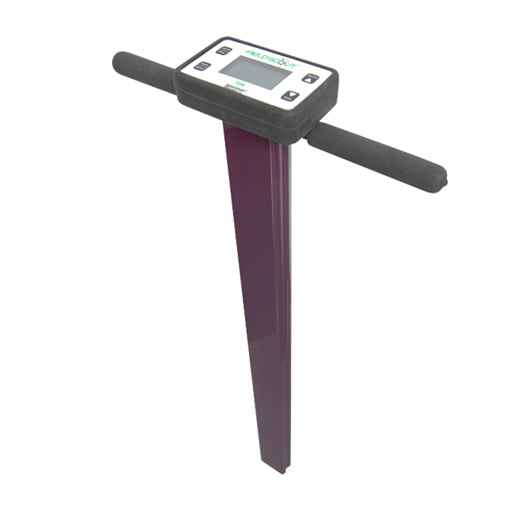
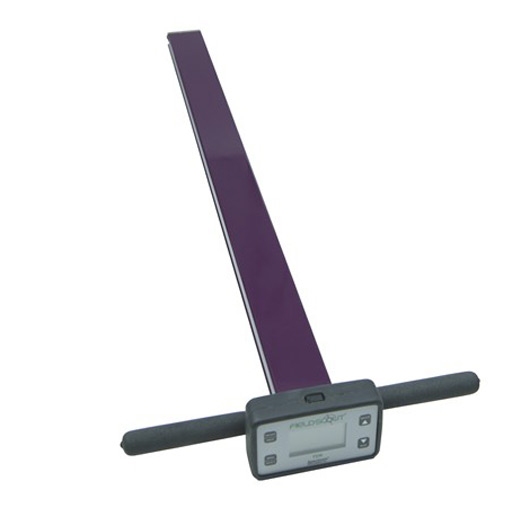
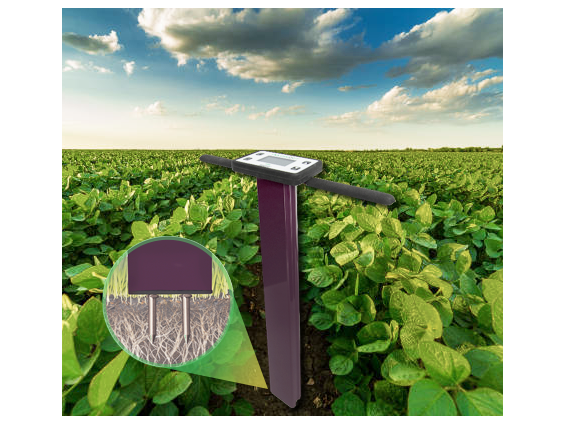
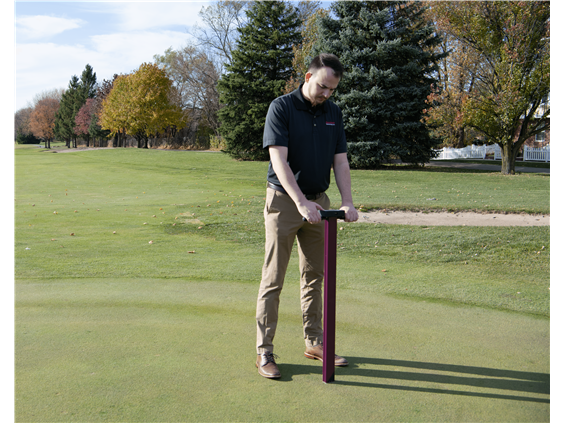
The Spectrum Technologies FieldScout TDR 250 is best suited for quickly measuring volumetric water content directly within the soil root zone. Its shaft-mounted design allows readings to be taken while standing, making it practical for checking numerous locations across golf greens, sports fields, landscaped areas, nurseries and other managed turf or growing environments.
Consistent Measurements Across Different Soil Types
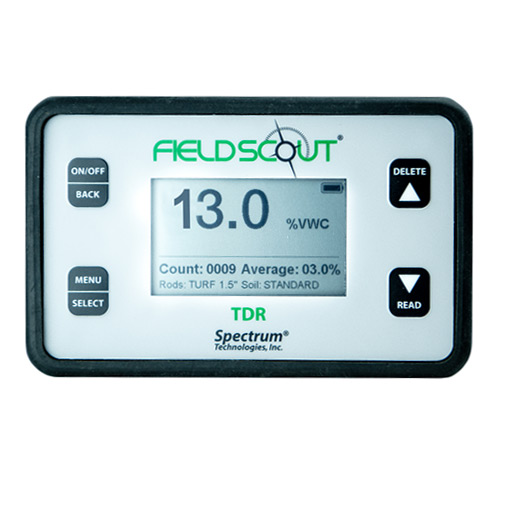
The TDR 250 uses time-domain reflectometry to determine volumetric water content in less than a second. Operators can select settings for standard soil, high-clay soil or sand-based growing media, helping the meter provide more appropriate measurements under different field conditions. A running average is displayed alongside the individual readings, making it easier to compare locations and identify areas that may require irrigation or further investigation.
Designed for Turf, Horticulture and Soil Management
This soil moisture meter is particularly useful for golf-course maintenance, sports-turf management, commercial landscaping, horticulture, nurseries, irrigation management and agricultural research. Its portable configuration, removable handles and interchangeable probe rods make it suitable for repeated field measurements at different soil depths. Compared with basic handheld moisture testers, the TDR 250 combines rapid digital VWC readings with extensive internal data storage and USB data transfer, reducing the need to record results manually.
Standing-Height Field Operation
The shaft-mounted probe lets the operator insert the rods and take measurements without repeatedly bending down. Once the rods are fully inserted and the sensor base reaches the soil surface, pressing the READ button produces a measurement and updates the displayed count and running average.
Internal Data Logging and USB Transfer
The built-in data logger stores up to 124,000 measurements. Logged readings can be transferred directly to a USB flash drive through the meter’s USB Type-A port, without requiring a dedicated cable. The exported comma-separated file can be opened using common spreadsheet or text-editing software for recordkeeping, comparison, and further analysis.
Economy Soil Moisture Meter Specifications
| Measurement | Percent volumetric water content (VWC) and period raw sensor reading |
|---|---|
| VWC Accuracy | ±3.0% VWC at electrical conductivity below 2 mS/cm |
| VWC Range | 0% to saturation; saturation is typically approximately 50% volumetric water, depending on soil type |
| Resolution | 0.1% VWC |
| Data Logger | Up to 124,000 measurements |
| Measurement Principle | Time-domain reflectometry |
| Soil Settings | Standard, high-clay and sand |
| Connectivity | USB Type-A port for USB flash drives |
| Display | Backlit, high-contrast graphic LCD |
| Power | 4 AA alkaline batteries |
| Weight | 4.3 lb (1.9 kg) |
| IP Rating | Display: IP53; probe: IP67 |
Features of the Economy Soil Moisture Meter
- Displays volumetric water content as a percentage
- Shows a running average and measurement count
- Produces soil moisture readings in less than one second
- Provides settings for standard, high-clay and sand soils
- Can operate in an EC-compensated VWC mode or a mode corresponding with TDR 300 measurements
- Stores up to 124,000 measurements internally
- Transfers recorded data directly to a USB flash drive
- Uses a high-contrast graphic display with an adjustable backlight
- Features an ergonomic shaft-mounted design for taking readings while standing
- Includes removable cushion-grip handles for easier transport and storage
- Accepts interchangeable probe rods for measurements at different depths
- Records the measurement time, VWC, raw period reading, rod type, soil type and selected VWC mode
Available TDR Probe Rod Lengths
The meter requires a compatible pair of TDR probe rods, which are sold separately. Select the rod length according to the depth of soil that needs to be evaluated.
| Probe Type | Rod Length |
|---|---|
| Turf | 1.5 in. (3.8 cm) |
| Short | 3 in. (7.6 cm) |
| Medium | 4.8 in. (12.2 cm) |
| Long | 8 in. (20.3 cm) |
Important: TDR probe rods are required to take measurements and must be purchased separately.
Quick Tip: Setting Up the Meter
- Slide the lock washers onto the threaded ends of the handlebars.
- Install the two cushion-grip handles and tighten them securely.
- Pull the battery transport tab out of the display unit.
- Select the appropriate probe rods and screw them into the bottom of the probe block.
- Tighten the rods securely before inserting them into the soil.
- Select the correct rod length, soil type and measurement settings in the meter menu.
Taking a Soil Moisture Reading
- Grip the handles on both sides of the display.
- Apply steady downward pressure until the rods are fully inserted and the sensor base contacts the soil surface.
- Avoid rocking the probe from side to side, as this can create air pockets and affect measurement accuracy.
- Press the READ button to take a measurement.
- Review the VWC result, measurement count and running average on the display.
Learn more in the FieldScout TDR 250 instruction manual.
Frequently Asked Questions about Soil Moisture Meters
What is a soil moisture meter best used for?
A soil moisture meter quickly measures the moisture level in the ground to determine if watering is needed. It helps gardeners, horticulturists, and growers prevent both underwatering and overwatering, both of which can harm plant development.
How does an economy soil moisture meter work?
The device features a metal probe that inserts directly into the soil. This probe measures electrical conductivity related to the presence of moisture and instantly displays the moisture level on a graduated dial. No soil sampling or power supply is required.
Does the moisture meter require batteries or a power supply?
No. Mechanical soil moisture meters operate without batteries or external power. They are ready to use at any time and require very little maintenance.
What types of soil can be measured?
This type of moisture meter is suitable for most soils used in horticulture and agriculture, including:
- Potting soil
- Garden soil
- Sandy soils
- Loamy soils
- Clay soils
- Potted plant mixes
Note: For reliable results, the probe must be inserted into sufficiently compacted soil to ensure good contact.
Can this moisture meter be used for indoor plants?
Yes. It is highly popular for indoor plants, tropical plants, orchids, cacti, succulents, bonsais, and planters. It allows you to quickly check if the substrate is still wet before watering.
Is the moisture meter suitable for gardens and vegetable patches?
Absolutely. It is commonly used to monitor moisture in flowerbeds, vegetable gardens, greenhouses, flower arrangements, shrubs, fruit trees, and young saplings.
What is the ideal depth to take a measurement?
The probe should be inserted to a depth that corresponds with the main root zone of the plant. For potted plants, it is generally recommended to measure at mid-depth of the container, while for in-ground plants, the depth depends on the root system.
How do you interpret the measurement results?
Most economy moisture meters use a scale showing zones that correspond to dry, lightly moist, or wet soil. Exact needs vary by plant species; some prefer a constantly moist substrate, while others need to dry out partially between waterings.
How often should I measure soil moisture?
The frequency depends on the plant, season, temperature, and soil type. For plants sensitive to watering, a daily check or a reading every two to three days is often recommended to prevent watering errors.
Does the moisture meter also measure pH or light levels?
No. This model is designed solely to measure soil moisture. Measuring pH, light, or temperature requires instruments specially engineered for those parameters.
How do you maintain the moisture meter?
After each use, it is recommended to gently wipe the probe with a clean cloth to remove soil residue and moisture. Do not leave the device permanently in the soil, as this can reduce its lifespan.
What are the main benefits of an economy soil moisture meter?
- Fast moisture readings.
- Battery-free operation.
- Simple, instant readout.
- No sample preparation required.
- Lightweight and highly portable.
- Prevents overwatering and underwatering.
- Suitable for both indoor plants and outdoor gardens.
- Excellent value for everyday use.
Perform Professional Soil Moisture Measurements in the Root Zone and Maintain Consistent Turf Quality
Fast VWC Measurements for Irrigation and Turf Management
The Spectrum Technologies FieldScout TDR 250 is best suited for quickly measuring volumetric water content directly within the soil root zone. Its shaft-mounted design allows readings to be taken while standing, making it practical for checking numerous locations across golf greens, sports fields, landscaped areas, nurseries and other managed turf or growing environments.
Consistent Measurements Across Different Soil Types
The TDR 250 uses time-domain reflectometry to determine volumetric water content in less than a second. Operators can select settings for standard soil, high-clay soil or sand-based growing media, helping the meter provide more appropriate measurements under different field conditions. A running average is displayed alongside the individual readings, making it easier to compare locations and identify areas that may require irrigation or further investigation.
Designed for Turf, Horticulture and Soil Management
This soil moisture meter is particularly useful for golf-course maintenance, sports-turf management, commercial landscaping, horticulture, nurseries, irrigation management and agricultural research. Its portable configuration, removable handles and interchangeable probe rods make it suitable for repeated field measurements at different soil depths. Compared with basic handheld moisture testers, the TDR 250 combines rapid digital VWC readings with extensive internal data storage and USB data transfer, reducing the need to record results manually.
Standing-Height Field Operation
The shaft-mounted probe lets the operator insert the rods and take measurements without repeatedly bending down. Once the rods are fully inserted and the sensor base reaches the soil surface, pressing the READ button produces a measurement and updates the displayed count and running average.
Internal Data Logging and USB Transfer
The built-in data logger stores up to 124,000 measurements. Logged readings can be transferred directly to a USB flash drive through the meter’s USB Type-A port, without requiring a dedicated cable. The exported comma-separated file can be opened using common spreadsheet or text-editing software for recordkeeping, comparison, and further analysis.
Economy Soil Moisture Meter Specifications
| Measurement | Percent volumetric water content (VWC) and period raw sensor reading |
|---|---|
| VWC Accuracy | ±3.0% VWC at electrical conductivity below 2 mS/cm |
| VWC Range | 0% to saturation; saturation is typically approximately 50% volumetric water, depending on soil type |
| Resolution | 0.1% VWC |
| Data Logger | Up to 124,000 measurements |
| Measurement Principle | Time-domain reflectometry |
| Soil Settings | Standard, high-clay and sand |
| Connectivity | USB Type-A port for USB flash drives |
| Display | Backlit, high-contrast graphic LCD |
| Power | 4 AA alkaline batteries |
| Weight | 4.3 lb (1.9 kg) |
| IP Rating | Display: IP53; probe: IP67 |
Features of the Economy Soil Moisture Meter
- Displays volumetric water content as a percentage
- Shows a running average and measurement count
- Produces soil moisture readings in less than one second
- Provides settings for standard, high-clay and sand soils
- Can operate in an EC-compensated VWC mode or a mode corresponding with TDR 300 measurements
- Stores up to 124,000 measurements internally
- Transfers recorded data directly to a USB flash drive
- Uses a high-contrast graphic display with an adjustable backlight
- Features an ergonomic shaft-mounted design for taking readings while standing
- Includes removable cushion-grip handles for easier transport and storage
- Accepts interchangeable probe rods for measurements at different depths
- Records the measurement time, VWC, raw period reading, rod type, soil type and selected VWC mode
Available TDR Probe Rod Lengths
The meter requires a compatible pair of TDR probe rods, which are sold separately. Select the rod length according to the depth of soil that needs to be evaluated.
| Probe Type | Rod Length |
|---|---|
| Turf | 1.5 in. (3.8 cm) |
| Short | 3 in. (7.6 cm) |
| Medium | 4.8 in. (12.2 cm) |
| Long | 8 in. (20.3 cm) |
Important: TDR probe rods are required to take measurements and must be purchased separately.
Quick Tip: Setting Up the Meter
- Slide the lock washers onto the threaded ends of the handlebars.
- Install the two cushion-grip handles and tighten them securely.
- Pull the battery transport tab out of the display unit.
- Select the appropriate probe rods and screw them into the bottom of the probe block.
- Tighten the rods securely before inserting them into the soil.
- Select the correct rod length, soil type and measurement settings in the meter menu.
Taking a Soil Moisture Reading
- Grip the handles on both sides of the display.
- Apply steady downward pressure until the rods are fully inserted and the sensor base contacts the soil surface.
- Avoid rocking the probe from side to side, as this can create air pockets and affect measurement accuracy.
- Press the READ button to take a measurement.
- Review the VWC result, measurement count and running average on the display.
Learn more in the FieldScout TDR 250 instruction manual.
Frequently Asked Questions about Soil Moisture Meters
What is a soil moisture meter best used for?
A soil moisture meter quickly measures the moisture level in the ground to determine if watering is needed. It helps gardeners, horticulturists, and growers prevent both underwatering and overwatering, both of which can harm plant development.
How does an economy soil moisture meter work?
The device features a metal probe that inserts directly into the soil. This probe measures electrical conductivity related to the presence of moisture and instantly displays the moisture level on a graduated dial. No soil sampling or power supply is required.
Does the moisture meter require batteries or a power supply?
No. Mechanical soil moisture meters operate without batteries or external power. They are ready to use at any time and require very little maintenance.
What types of soil can be measured?
This type of moisture meter is suitable for most soils used in horticulture and agriculture, including:
- Potting soil
- Garden soil
- Sandy soils
- Loamy soils
- Clay soils
- Potted plant mixes
Note: For reliable results, the probe must be inserted into sufficiently compacted soil to ensure good contact.
Can this moisture meter be used for indoor plants?
Yes. It is highly popular for indoor plants, tropical plants, orchids, cacti, succulents, bonsais, and planters. It allows you to quickly check if the substrate is still wet before watering.
Is the moisture meter suitable for gardens and vegetable patches?
Absolutely. It is commonly used to monitor moisture in flowerbeds, vegetable gardens, greenhouses, flower arrangements, shrubs, fruit trees, and young saplings.
What is the ideal depth to take a measurement?
The probe should be inserted to a depth that corresponds with the main root zone of the plant. For potted plants, it is generally recommended to measure at mid-depth of the container, while for in-ground plants, the depth depends on the root system.
How do you interpret the measurement results?
Most economy moisture meters use a scale showing zones that correspond to dry, lightly moist, or wet soil. Exact needs vary by plant species; some prefer a constantly moist substrate, while others need to dry out partially between waterings.
How often should I measure soil moisture?
The frequency depends on the plant, season, temperature, and soil type. For plants sensitive to watering, a daily check or a reading every two to three days is often recommended to prevent watering errors.
Does the moisture meter also measure pH or light levels?
No. This model is designed solely to measure soil moisture. Measuring pH, light, or temperature requires instruments specially engineered for those parameters.
How do you maintain the moisture meter?
After each use, it is recommended to gently wipe the probe with a clean cloth to remove soil residue and moisture. Do not leave the device permanently in the soil, as this can reduce its lifespan.
What are the main benefits of an economy soil moisture meter?
- Fast moisture readings.
- Battery-free operation.
- Simple, instant readout.
- No sample preparation required.
- Lightweight and highly portable.
- Prevents overwatering and underwatering.
- Suitable for both indoor plants and outdoor gardens.
- Excellent value for everyday use.