


Road Surface and Ambient Air Temperature Monitoring with Temp Road
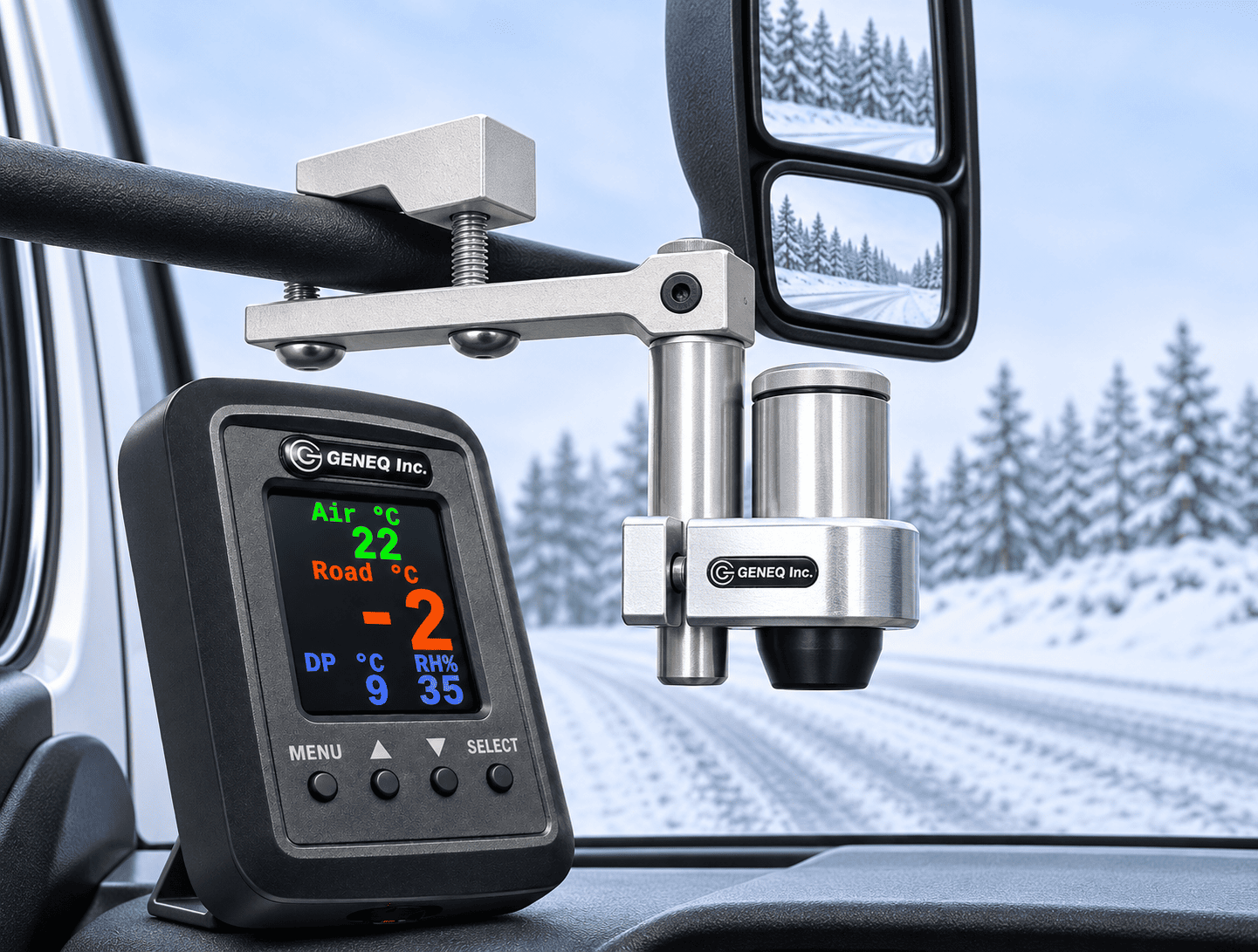
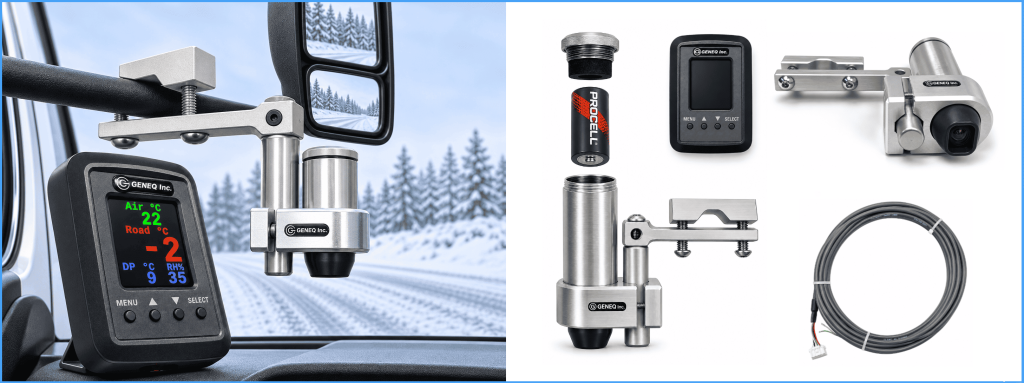
Temp Road allows drivers and road maintenance crews to monitor road surface and ambient air temperatures directly from their vehicles. Using a non-contact infrared sensor and a digital display installed inside the cab, the system provides valuable temperature measurements to help anticipate freezing conditions and improve winter maintenance decisions.
Designed for trucks, snow removal vehicles, and service fleets, Temp Road provides additional insight into changing road conditions, particularly when pavement temperatures differ from ambient air temperatures.
Infrared Road Surface Temperature Measurement
Temp Road uses an infrared sensor to measure thermal energy emitted by the road surface without making physical contact with the pavement. This technology allows the system to monitor temperature variations while the vehicle is moving.
The system provides approximately four road surface temperature readings per second, while ambient air temperature is updated approximately once per second. These frequent measurements help drivers follow rapidly changing conditions, including when crossing bridges, overpasses, and road sections exposed to different levels of sunlight.
Improved Awareness of Potential Freezing Conditions
Ambient air temperature does not always reflect the actual temperature of the pavement. Solar radiation, nighttime cooling, wind, and surface characteristics can produce significant differences between the two measurements.
A road surface may reach freezing temperatures even when the surrounding air remains above 32°F (0°C). Temp Road provides drivers with additional information to assess road conditions and recognize situations where black ice may develop.
The system does not directly detect the presence of ice. It measures surface temperature, which should be interpreted alongside moisture, precipitation, and other weather conditions.
Digital Display and Temperature Warning Indicator
The system includes a digital display that allows drivers to view road surface and ambient air temperatures from inside the cab. The display is designed for convenient monitoring during road maintenance and fleet operations.
Depending on the system configuration, the display features high-contrast LEDs with automatic brightness adjustment and a warning indicator that activates when road surface temperatures approach freezing.
Easy and Quick Sensor Head Replacement
Sensors mounted outside vehicles are exposed to demanding conditions, including water spray, slush, road salt, vibration, and temperature fluctuations.
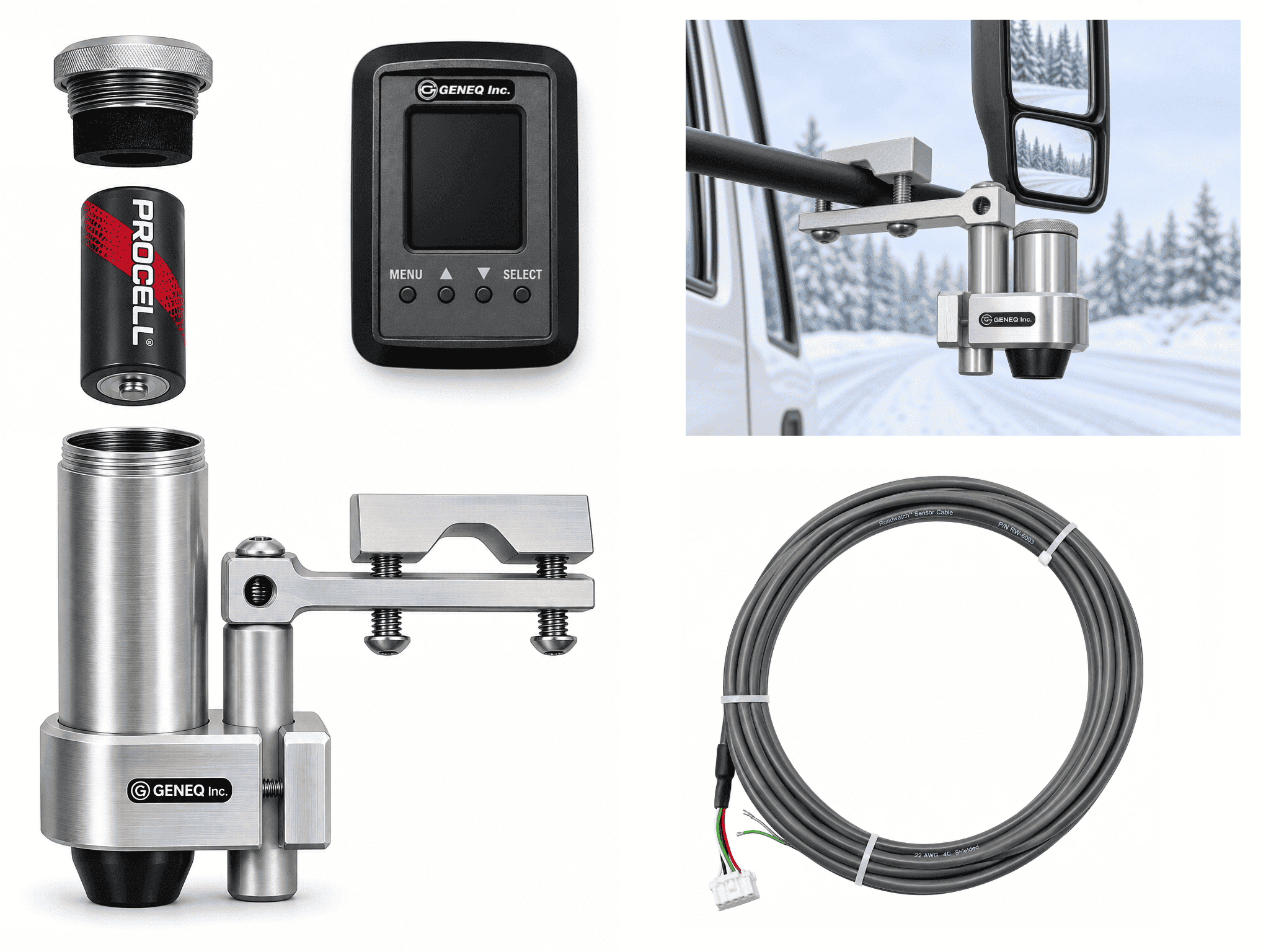
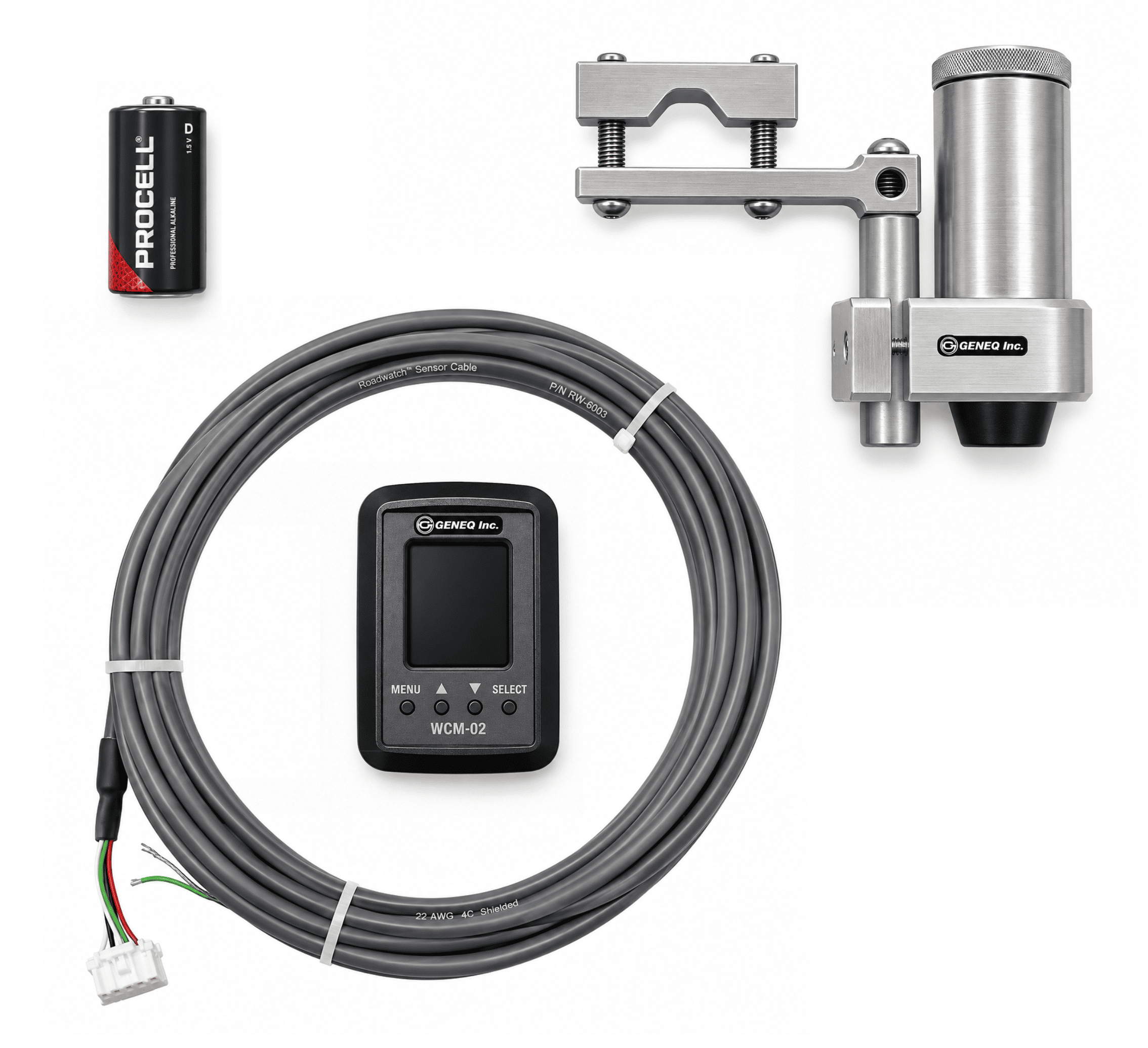
Temp Road features a replaceable sensor head that can be exchanged in just a few minutes without rerouting the entire cable through the vehicle. This design simplifies maintenance and helps reduce vehicle downtime when a sensor needs replacement.
Improved Ambient Air Temperature Sensor
The system incorporates an improved ambient air temperature sensor designed to respond more quickly to temperature changes than previous versions. This faster response helps drivers monitor changing environmental conditions while traveling.
Extension Cables and Flexible Installation
Extension cables measuring 4, 12, and 16 feet are available to accommodate different vehicle sizes and installation configurations. Flexible cabling also facilitates routing through confined spaces, including behind dashboards and around door openings.
For reliable measurements, the sensor should be directed toward the pavement and installed in a location that minimizes exposure to road spray and heat sources from the vehicle. Mounting the sensor on an exterior mirror support may be suitable for many trucks.
Optimizing Salt Application and De-Icing Operations
Knowing the actual road surface temperature can help highway maintenance departments and winter service crews make more informed decisions about anti-icing and de-icing operations.
The effectiveness of road salt and other de-icing materials varies with pavement temperature. Accurate surface temperature measurements can help maintenance personnel select appropriate treatments and determine application rates according to local operating procedures.
More targeted application of de-icing materials may help reduce unnecessary salt usage, control operating expenses, and limit the environmental impact associated with excessive road salt application.
However, pavement temperature is only one factor in determining proper treatment. Precipitation, moisture, traffic, surface conditions, and the type of de-icing product must also be considered.
Applications for Winter Road Maintenance and Vehicle Fleets
- Municipal snow removal: Monitoring pavement conditions during winter maintenance routes.
- Salt spreading and de-icing: Using road surface temperature measurements to guide de-icing material selection and application.
- Highway maintenance: Tracking temperature differences across road sections, bridges, and overpasses.
- Commercial truck fleets: Providing drivers with additional information when traveling through changing winter conditions.
- Facility and roadway maintenance: Monitoring surface temperatures in applications compatible with the system.
Durable Construction for Winter Operating Conditions
Winter maintenance operations require equipment capable of functioning in demanding environments. Temp Road is designed to withstand conditions commonly encountered by road service vehicles, including moisture, road salt exposure, and changing temperatures.
Its modular design simplifies sensor maintenance and allows service personnel to replace applicable components without reinstalling the complete wiring system.
Infrared Sensor Accuracy and Calibration
The road surface temperature sensor is designed to provide an accuracy of ±2°F (±1°C) under the manufacturer’s specified measurement conditions, particularly when ambient air temperature is between 23°F and 41°F (-5°C to +5°C).
Sensors are factory-calibrated using a procedure involving multiple temperature points and verification stages. The manufacturer describes the use of NIST-traceable measurement references and process controls intended to maintain measurement consistency.
Actual measurement accuracy may depend on sensor version, installation conditions, and environmental factors. The applicable specifications should be verified for the exact system configuration.
Technical Specifications
| Specification | Description |
|---|---|
| Measurement technology | Non-contact infrared sensing |
| Measured parameters | Road surface and ambient air temperature |
| Road temperature update rate | Approximately 4 readings per second |
| Air temperature update rate | Approximately 1 reading per second |
| Road temperature accuracy | ±2°F (±1°C), under specified conditions |
| Display | Digital, with warning indicator depending on version |
| Extension cables | 4, 12, and 16 feet, depending on configuration |
| Maintenance | Replaceable sensor head |
| Installation | Exterior mounting directed toward road surface |
| Applications | Trucks, snow removal, road maintenance, and vehicle fleets |
Specifications may vary depending on the sensor version, display unit, and installed accessories. Verify the exact configuration before ordering.
Frequently Asked Questions About Temp Road
Why measure road surface temperature instead of relying only on air temperature?
Road surfaces can be considerably warmer or colder than the surrounding air. Measuring pavement temperature provides additional information for assessing freezing risks, particularly on bridges, overpasses, and during clear nights when surfaces may cool rapidly.
Can Temp Road detect black ice directly?
No. Temp Road measures road surface temperature but does not directly identify ice. However, a pavement temperature near or below 32°F (0°C), combined with moisture, may indicate conditions favorable to ice formation.
Where should the sensor be installed on a truck?
Mounting the sensor on an exterior mirror support is recommended for certain truck configurations. The sensor should have an unobstructed view of the pavement while remaining protected from direct road spray and vehicle heat sources that could affect measurements. Installation should follow the manufacturer’s instructions.
Can Temp Road connect to a road salt spreader controller?
Some salt spreader controllers and fleet management systems can receive temperature data through compatible interfaces. Availability of this feature and any required adapters depend on the system version and controller manufacturer.
Does the sensor require regular calibration?
The sensor is factory-calibrated. Depending on the system version, field recalibration is generally not required. Periodic inspections of sensor condition, operation, and measurement accuracy are nevertheless recommended, particularly before the winter maintenance season.
Can Temp Road help reduce road salt consumption?
Yes. Road surface temperature information can support more targeted de-icing treatments. By combining pavement temperature readings with weather conditions and established maintenance procedures, crews can better adjust applications and avoid unnecessary material usage.
Can Temp Road be installed on different types of vehicles?
Temp Road is suitable for various road monitoring applications, including trucks, snow removal vehicles, and certain service vehicles. Compatibility depends on available mounting locations, electrical power requirements, and system configuration.
What are the advantages of non-contact infrared sensing?
An infrared sensor measures surface temperature without physically touching the pavement. This allows continuous monitoring while the vehicle is moving and eliminates the need for a temperature probe in direct contact with the roadway. The technology makes it possible to follow temperature variations across different road sections.
Road Surface and Ambient Air Temperature Monitoring with Temp Road
Temp Road allows drivers and road maintenance crews to monitor road surface and ambient air temperatures directly from their vehicles. Using a non-contact infrared sensor and a digital display installed inside the cab, the system provides valuable temperature measurements to help anticipate freezing conditions and improve winter maintenance decisions.
Designed for trucks, snow removal vehicles, and service fleets, Temp Road provides additional insight into changing road conditions, particularly when pavement temperatures differ from ambient air temperatures.
Infrared Road Surface Temperature Measurement
Temp Road uses an infrared sensor to measure thermal energy emitted by the road surface without making physical contact with the pavement. This technology allows the system to monitor temperature variations while the vehicle is moving.
The system provides approximately four road surface temperature readings per second, while ambient air temperature is updated approximately once per second. These frequent measurements help drivers follow rapidly changing conditions, including when crossing bridges, overpasses, and road sections exposed to different levels of sunlight.
Improved Awareness of Potential Freezing Conditions
Ambient air temperature does not always reflect the actual temperature of the pavement. Solar radiation, nighttime cooling, wind, and surface characteristics can produce significant differences between the two measurements.
A road surface may reach freezing temperatures even when the surrounding air remains above 32°F (0°C). Temp Road provides drivers with additional information to assess road conditions and recognize situations where black ice may develop.
The system does not directly detect the presence of ice. It measures surface temperature, which should be interpreted alongside moisture, precipitation, and other weather conditions.
Digital Display and Temperature Warning Indicator
The system includes a digital display that allows drivers to view road surface and ambient air temperatures from inside the cab. The display is designed for convenient monitoring during road maintenance and fleet operations.
Depending on the system configuration, the display features high-contrast LEDs with automatic brightness adjustment and a warning indicator that activates when road surface temperatures approach freezing.
Easy and Quick Sensor Head Replacement
Sensors mounted outside vehicles are exposed to demanding conditions, including water spray, slush, road salt, vibration, and temperature fluctuations.
Temp Road features a replaceable sensor head that can be exchanged in just a few minutes without rerouting the entire cable through the vehicle. This design simplifies maintenance and helps reduce vehicle downtime when a sensor needs replacement.
Improved Ambient Air Temperature Sensor
The system incorporates an improved ambient air temperature sensor designed to respond more quickly to temperature changes than previous versions. This faster response helps drivers monitor changing environmental conditions while traveling.
Extension Cables and Flexible Installation
Extension cables measuring 4, 12, and 16 feet are available to accommodate different vehicle sizes and installation configurations. Flexible cabling also facilitates routing through confined spaces, including behind dashboards and around door openings.
For reliable measurements, the sensor should be directed toward the pavement and installed in a location that minimizes exposure to road spray and heat sources from the vehicle. Mounting the sensor on an exterior mirror support may be suitable for many trucks.
Optimizing Salt Application and De-Icing Operations
Knowing the actual road surface temperature can help highway maintenance departments and winter service crews make more informed decisions about anti-icing and de-icing operations.
The effectiveness of road salt and other de-icing materials varies with pavement temperature. Accurate surface temperature measurements can help maintenance personnel select appropriate treatments and determine application rates according to local operating procedures.
More targeted application of de-icing materials may help reduce unnecessary salt usage, control operating expenses, and limit the environmental impact associated with excessive road salt application.
However, pavement temperature is only one factor in determining proper treatment. Precipitation, moisture, traffic, surface conditions, and the type of de-icing product must also be considered.
Applications for Winter Road Maintenance and Vehicle Fleets
- Municipal snow removal: Monitoring pavement conditions during winter maintenance routes.
- Salt spreading and de-icing: Using road surface temperature measurements to guide de-icing material selection and application.
- Highway maintenance: Tracking temperature differences across road sections, bridges, and overpasses.
- Commercial truck fleets: Providing drivers with additional information when traveling through changing winter conditions.
- Facility and roadway maintenance: Monitoring surface temperatures in applications compatible with the system.
Durable Construction for Winter Operating Conditions
Winter maintenance operations require equipment capable of functioning in demanding environments. Temp Road is designed to withstand conditions commonly encountered by road service vehicles, including moisture, road salt exposure, and changing temperatures.
Its modular design simplifies sensor maintenance and allows service personnel to replace applicable components without reinstalling the complete wiring system.
Infrared Sensor Accuracy and Calibration
The road surface temperature sensor is designed to provide an accuracy of ±2°F (±1°C) under the manufacturer’s specified measurement conditions, particularly when ambient air temperature is between 23°F and 41°F (-5°C to +5°C).
Sensors are factory-calibrated using a procedure involving multiple temperature points and verification stages. The manufacturer describes the use of NIST-traceable measurement references and process controls intended to maintain measurement consistency.
Actual measurement accuracy may depend on sensor version, installation conditions, and environmental factors. The applicable specifications should be verified for the exact system configuration.
Technical Specifications
| Specification | Description |
|---|---|
| Measurement technology | Non-contact infrared sensing |
| Measured parameters | Road surface and ambient air temperature |
| Road temperature update rate | Approximately 4 readings per second |
| Air temperature update rate | Approximately 1 reading per second |
| Road temperature accuracy | ±2°F (±1°C), under specified conditions |
| Display | Digital, with warning indicator depending on version |
| Extension cables | 4, 12, and 16 feet, depending on configuration |
| Maintenance | Replaceable sensor head |
| Installation | Exterior mounting directed toward road surface |
| Applications | Trucks, snow removal, road maintenance, and vehicle fleets |
Specifications may vary depending on the sensor version, display unit, and installed accessories. Verify the exact configuration before ordering.
Frequently Asked Questions About Temp Road
Why measure road surface temperature instead of relying only on air temperature?
Road surfaces can be considerably warmer or colder than the surrounding air. Measuring pavement temperature provides additional information for assessing freezing risks, particularly on bridges, overpasses, and during clear nights when surfaces may cool rapidly.
Can Temp Road detect black ice directly?
No. Temp Road measures road surface temperature but does not directly identify ice. However, a pavement temperature near or below 32°F (0°C), combined with moisture, may indicate conditions favorable to ice formation.
Where should the sensor be installed on a truck?
Mounting the sensor on an exterior mirror support is recommended for certain truck configurations. The sensor should have an unobstructed view of the pavement while remaining protected from direct road spray and vehicle heat sources that could affect measurements. Installation should follow the manufacturer’s instructions.
Can Temp Road connect to a road salt spreader controller?
Some salt spreader controllers and fleet management systems can receive temperature data through compatible interfaces. Availability of this feature and any required adapters depend on the system version and controller manufacturer.
Does the sensor require regular calibration?
The sensor is factory-calibrated. Depending on the system version, field recalibration is generally not required. Periodic inspections of sensor condition, operation, and measurement accuracy are nevertheless recommended, particularly before the winter maintenance season.
Can Temp Road help reduce road salt consumption?
Yes. Road surface temperature information can support more targeted de-icing treatments. By combining pavement temperature readings with weather conditions and established maintenance procedures, crews can better adjust applications and avoid unnecessary material usage.
Can Temp Road be installed on different types of vehicles?
Temp Road is suitable for various road monitoring applications, including trucks, snow removal vehicles, and certain service vehicles. Compatibility depends on available mounting locations, electrical power requirements, and system configuration.
What are the advantages of non-contact infrared sensing?
An infrared sensor measures surface temperature without physically touching the pavement. This allows continuous monitoring while the vehicle is moving and eliminates the need for a temperature probe in direct contact with the roadway. The technology makes it possible to follow temperature variations across different road sections.